Chandrasekhara Venkata Raman
India · Sulla mappa · Scienziati · 1888-1970 · 82 anni
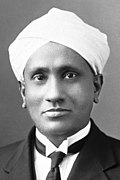
Sir Chandrasekhara Venkata Raman (Tamil: சந்திரசேகர வெங்கடராமன்) (Tiruchirappalli, 7 novembre 1888 - Bangalore, 21 novembre 1970) è stato un fisico indiano, Premio Nobel per la fisica nel 1930 per i suoi studi sulla diffusione della luce e per la scoperta dell'effetto Raman, che da lui prende il nome.
Testo tratto da Wikipedia, CC BY-SA 4.0
Chandrasekhara Venkata Raman: circa 982 letture al giorno, in 108 lingue.
Un giorno tipico, 30 giorni fino al giorno 20 novembre 2026
Il giorno centrale tra quelli contati, quindi una settimana di notizie non può spostarlo. La linea sotto mostra gli ultimi 400 giorni, un punto al giorno.
Qualcosa non va?Una vita in date
Intorno a Chandrasekhara
Famiglia
Genitori
 Chandrasekhara Venkata Raman
Partner
Figli

Fratelli e sorelle
È tutta la famiglia?
Sono mostrati solo i parenti che hanno un profilo qui, quindi una famiglia può essere più grande. Anche un legame può essere sbagliato. Un matrimonio appare concluso solo se la sua fine è registrata: un coniuge mostrato qui potrebbe quindi essere un ex coniuge.
Correggi questa famigliaMedia e musica
Foto 8


Citazioni 7
, Look at the resplendent colours on the soap bubbles! Why is the sea blue? What makes diamond glitter! Ask the right questions, and nature will open the doors to her secrets
The most important, the most fundamental and the deepest investigations are those that affect human life and activities most profoundly.
Man of science seeks to resolve the links between art, aesthetics, and the science.
Premi
Su questa persona
Raman era zio del fisico Subrahmanyan Chandrasekhar, premio Nobel per la Fisica nel 1983.
Testo tratto da Wikipedia, CC BY-SA 4.0